5 Ways the Panther Eclipse Outclasses Every Wearable on the Market
No screen. No distractions. Simply comprehensive health tracking in a classy bracelet you'll actually want to wear. Here are five reasons people are making the switch.
Free worldwide shipping · No subscription fees
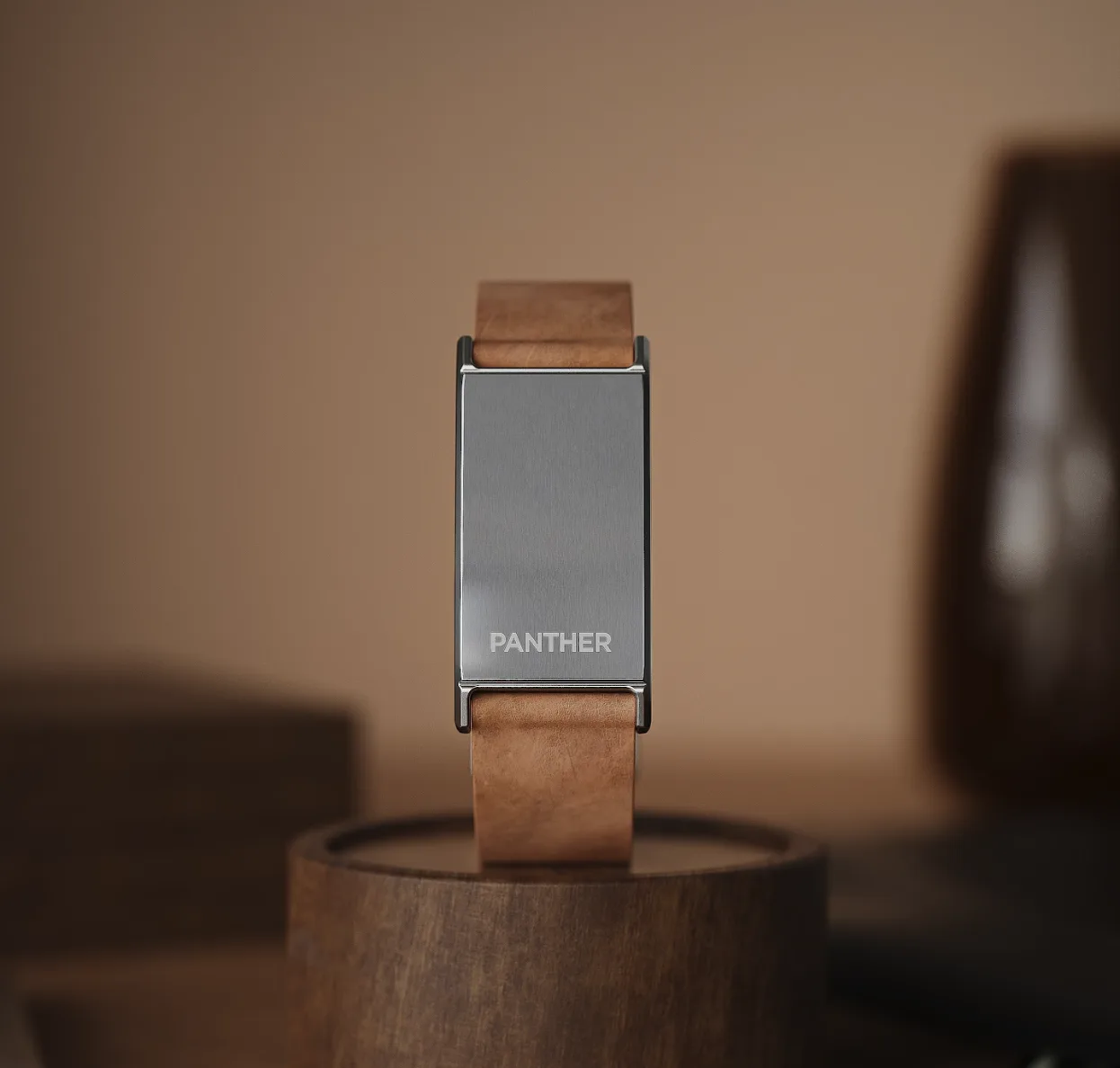
No Screens. No Distractions.
Users check their Apple Watch screen 80 times a day. The Eclipse? Zero.
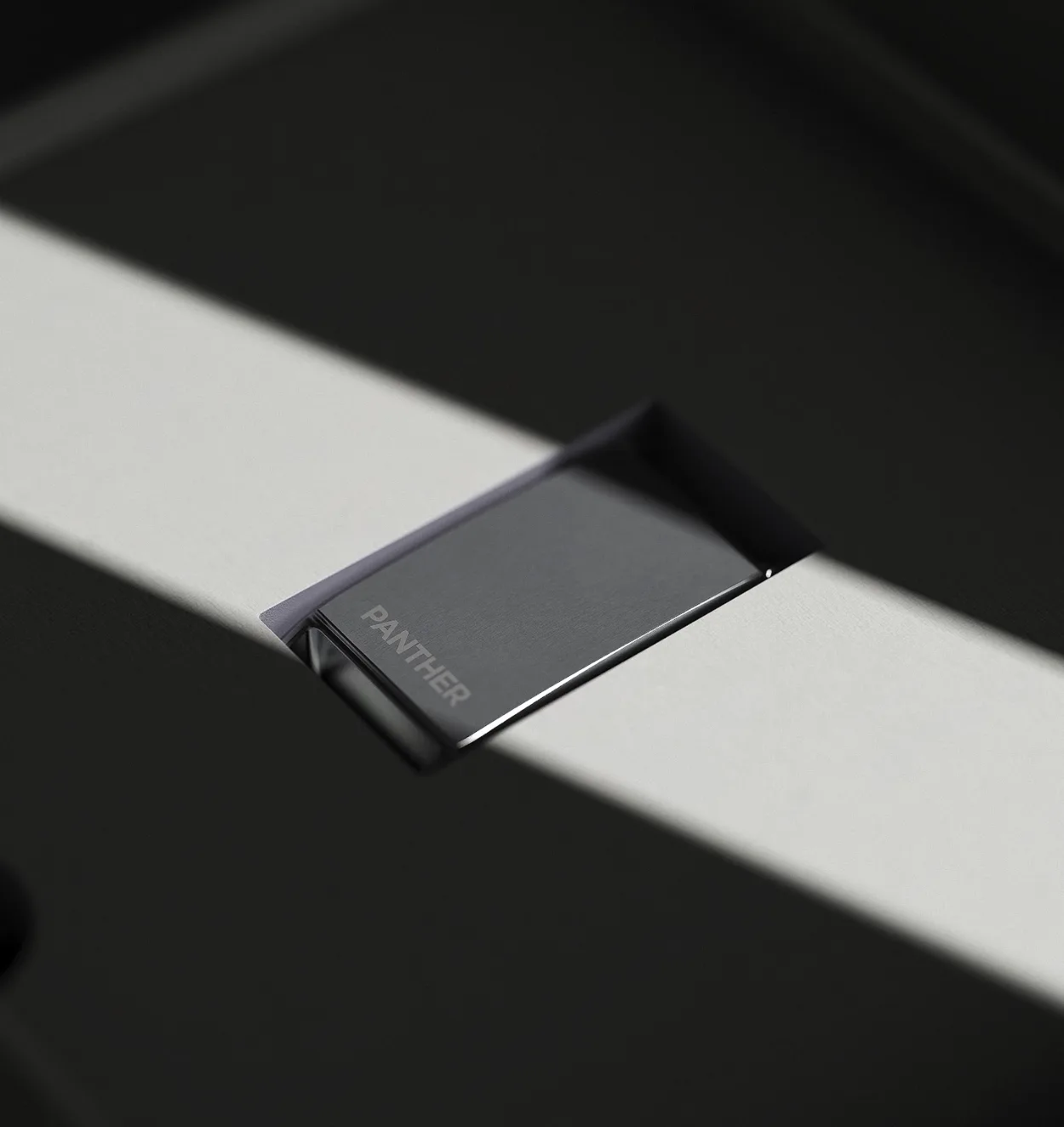
Users check their Apple Watch screen 80 times a day. The Eclipse? Zero. Every notification is a demand on your attention. Every screen is an invitation to spiral.
The Panther Eclipse was designed to break this cycle. There is no display. No app alerts. No social pings. Only clean, precise data, accessible on your terms, through the companion app, when you choose to look.
I was skeptical going in. Screenless felt like a constraint dressed up as a feature. But after a week, I stopped glancing at my wrist mid-conversation. Stopped getting pulled out of meals by buzzes I didn't ask for. Presence isn't a feature here, it's the foundation.
Zero Subscription Fees.
Buy it once. Own it forever. No paywalls.
Most modern wearables aren't products, they're subscriptions disguised as hardware. Oura locks core insights behind a $5.99 monthly fee. WHOOP charges $239 a year and the device only works while you're paying. Even Fitbit gates its best features behind Premium.
The Panther Eclipse doesn't play that game. There is no monthly fee. No annual plan. No premium tier hiding the data you already paid for. Every metric, every score, every insight is yours from day one and stays yours.
Over five years, the average smart-ring or strap subscription costs more than the Eclipse itself. Pay once, wear it for years, and keep every dollar that would have quietly drained out of your account each month. That's how hardware used to work. That's how it should still work.
Subscription vs. Own It Once.
Estimates based on publicly listed pricing as of 2025. WHOOP requires an active membership for the device to function.
15-Day Battery. Waterproof. Built To Last.
Charge it twice a month. Swim in it. Forget about it.
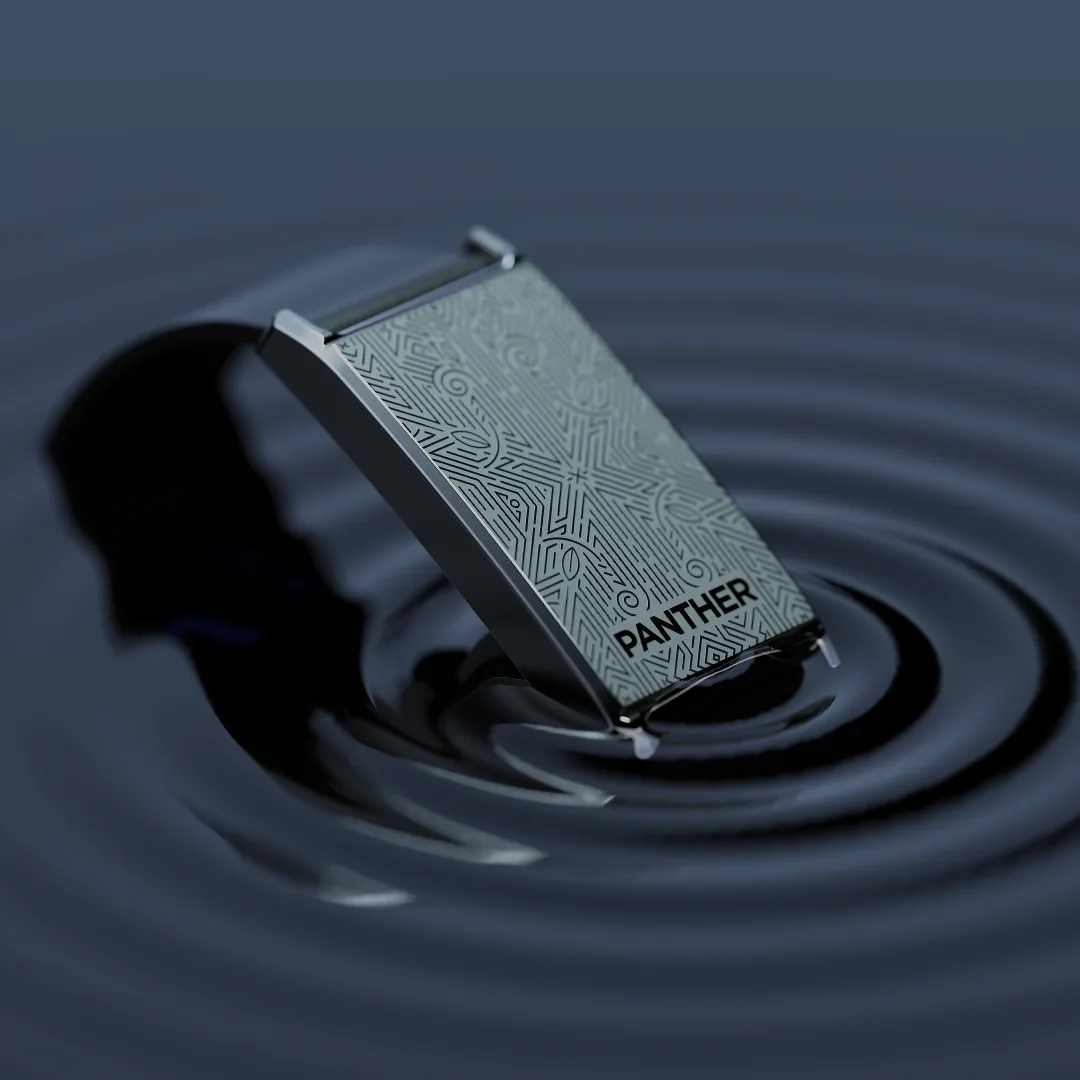
Most smartwatches barely survive a day. It's the dirty secret of the category: a device designed to track your health that requires a nightly charging ritual just to stay alive, sitting on a dock instead of your wrist for eight hours at a time.
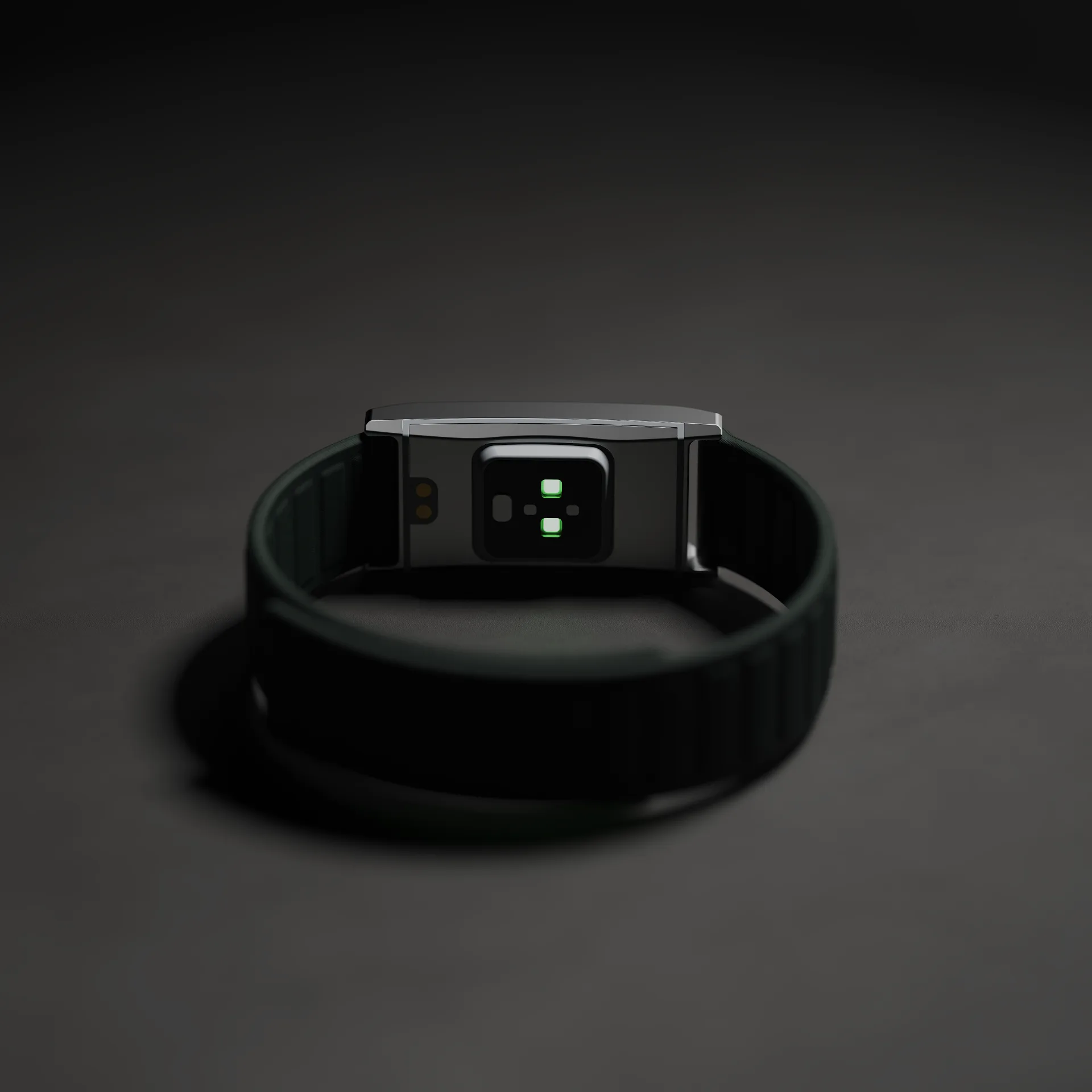
The Eclipse doesn't operate like that. I charged it on a Monday morning and didn't think about it again until the following weekend, still at 40%. No dock on the nightstand. No cable hunt before a trip. No battery check before leaving the house. Up to 15 days of continuous 24/7 health monitoring on a single charge.
It's also rated for full water resistance. Showers, pools, ocean swims, sweat-soaked workouts, none of it fazes the Eclipse. Machined 304L stainless steel and a sealed sensor housing mean it's built to be worn continuously, year after year, the way a real timepiece should be.
Eclipse vs. Other Wearables.
A quick side-by-side of how the Eclipse holds up against the rest of the category.
Health Insights That Actually Matter.
A clean, calm app. Every score readable at a glance.
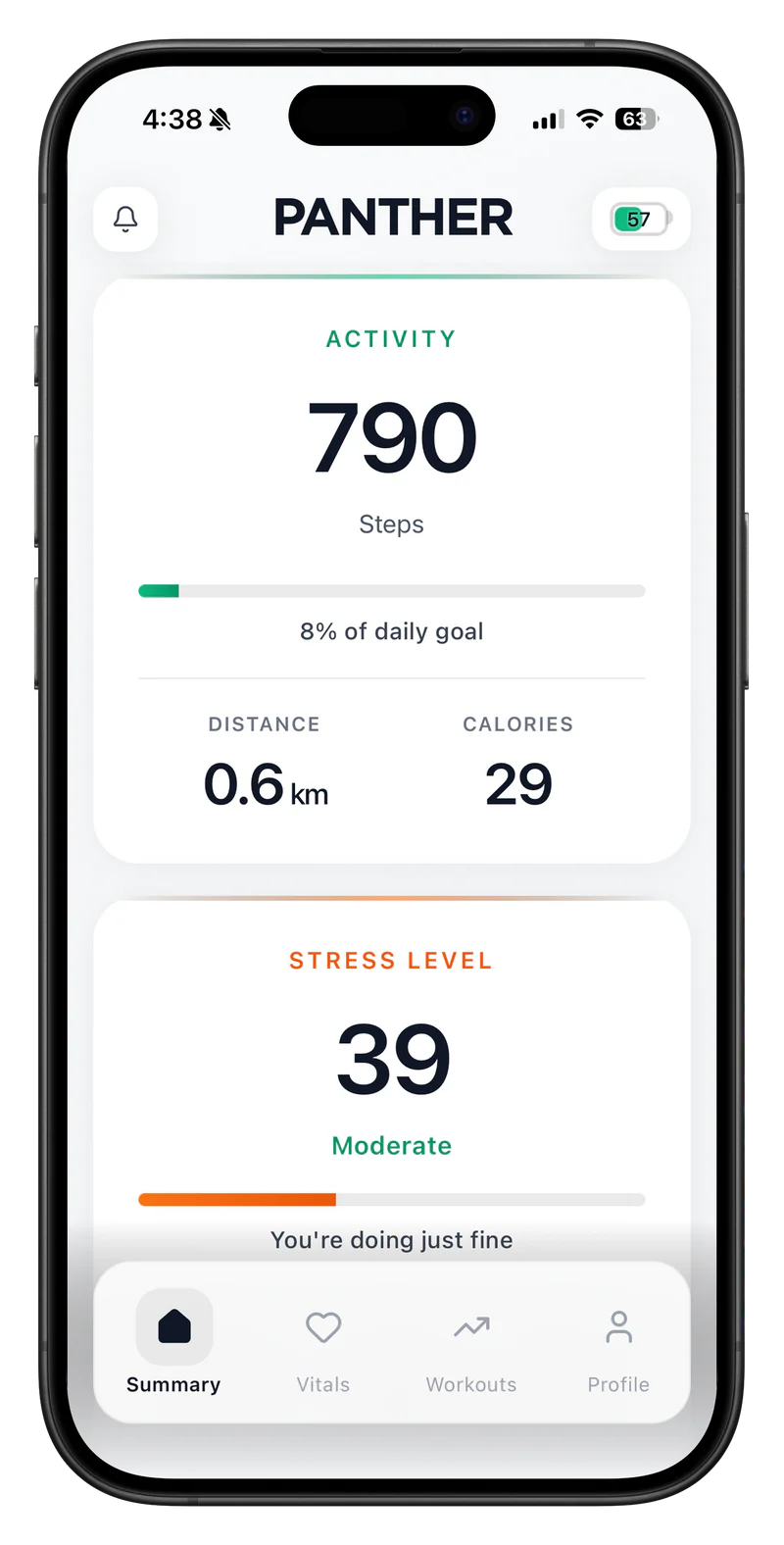
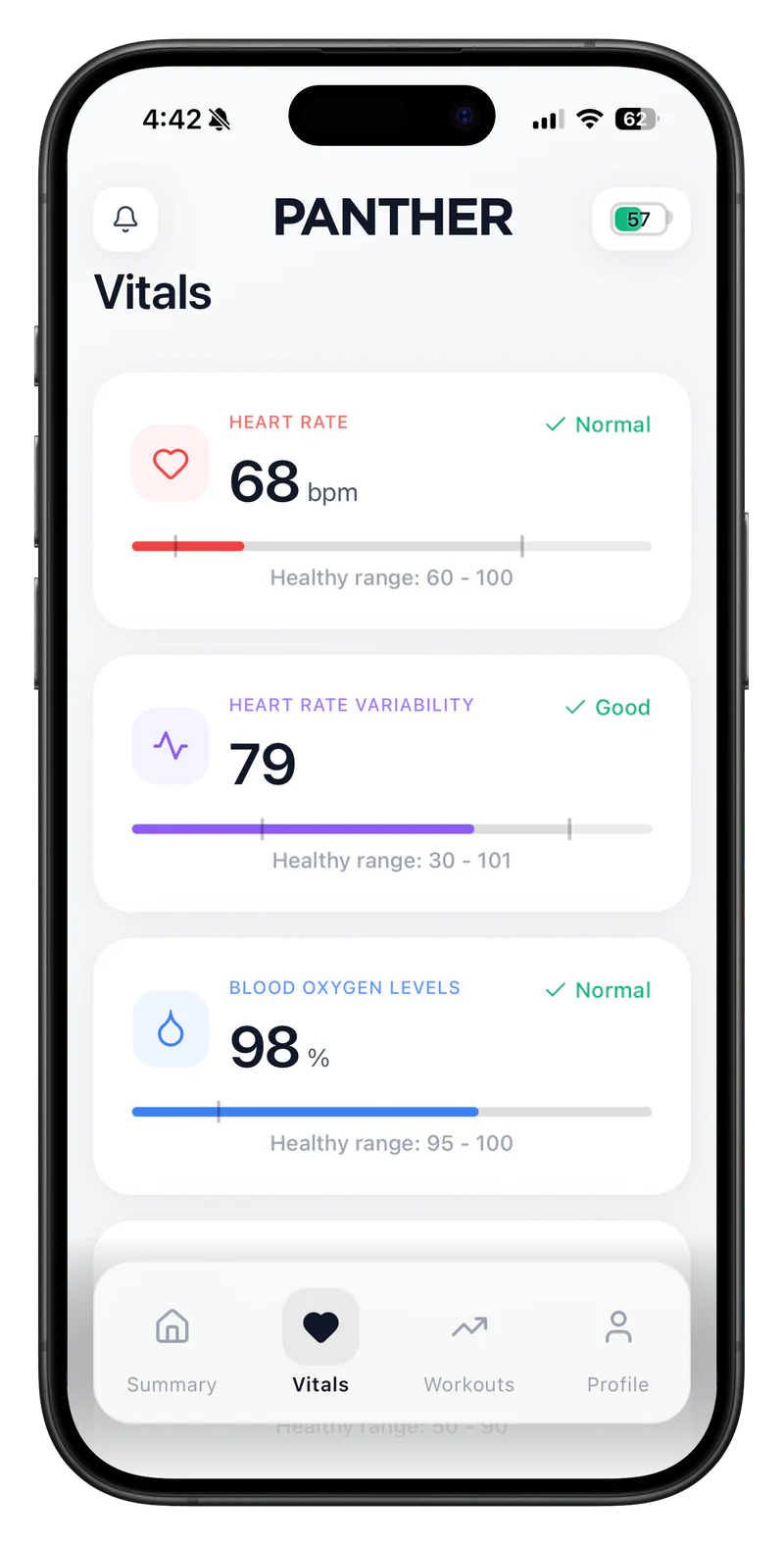
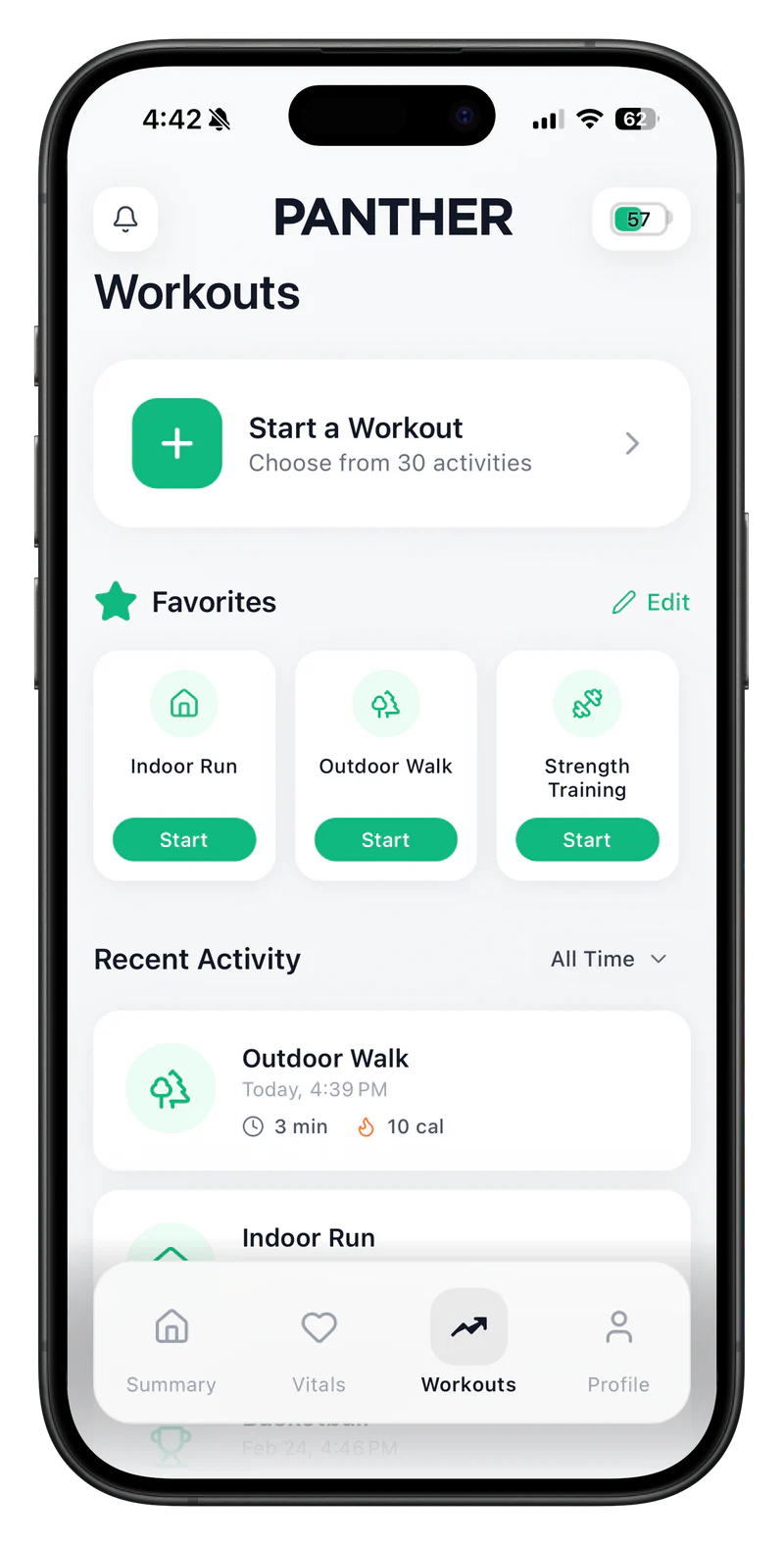
Most health apps drown you in graphs. Endless tabs, conflicting numbers, color-coded charts that require a manual to interpret. The Panther app is the opposite: a single, quiet dashboard with four daily scores at the top and the seven vital metrics that feed them sitting right beneath. No menus to dig through. No premium tier hiding the good stuff.
Open the app and you see exactly where you stand: Energy, Activity, Stress, and Sleep, each rendered as a clean numerical score with a one-line explanation of what changed since yesterday. Tap any score and the underlying vitals expand in plain language. HRV is up. Skin temperature is steady. Resting heart rate dropped two beats overnight. That's it. That's the whole interaction.
The whole app lives in just four tabs at the bottom: your daily scores, the seven vital metrics, workouts, and a profile and haptics tab. That's it. No buried settings, no endless sub-menus. Big numbers, generous spacing, monochrome typography, and a single accent color to flag anything that needs attention. After three weeks I stopped scrolling. I'd open the app, read four numbers in under five seconds, close it, and get on with my day. That's what a health tool is supposed to feel like.
The Specs, in One Look.
Luxury Timepiece Materials.
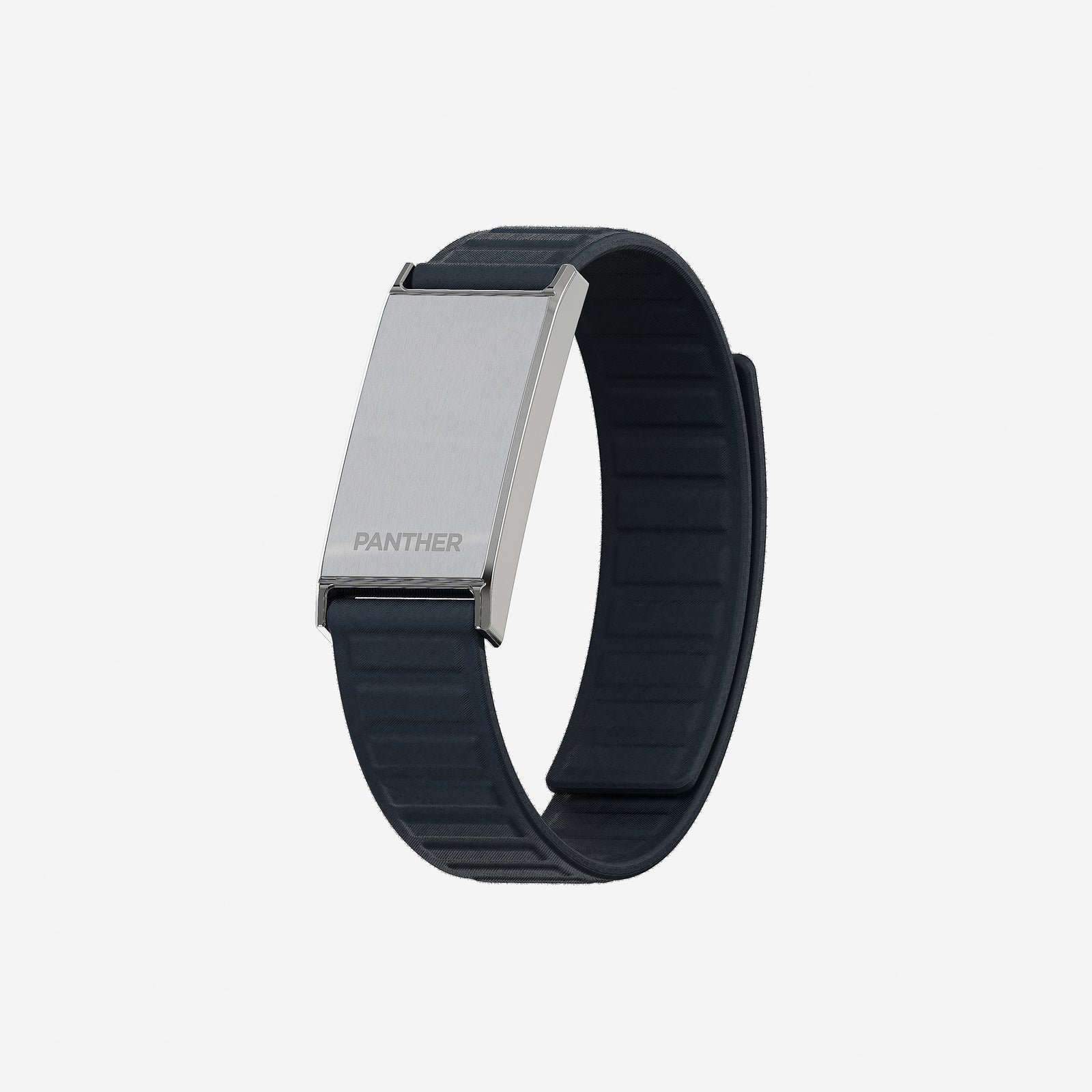
304L stainless steel. Neo-Deco geometry. Hand assembled.
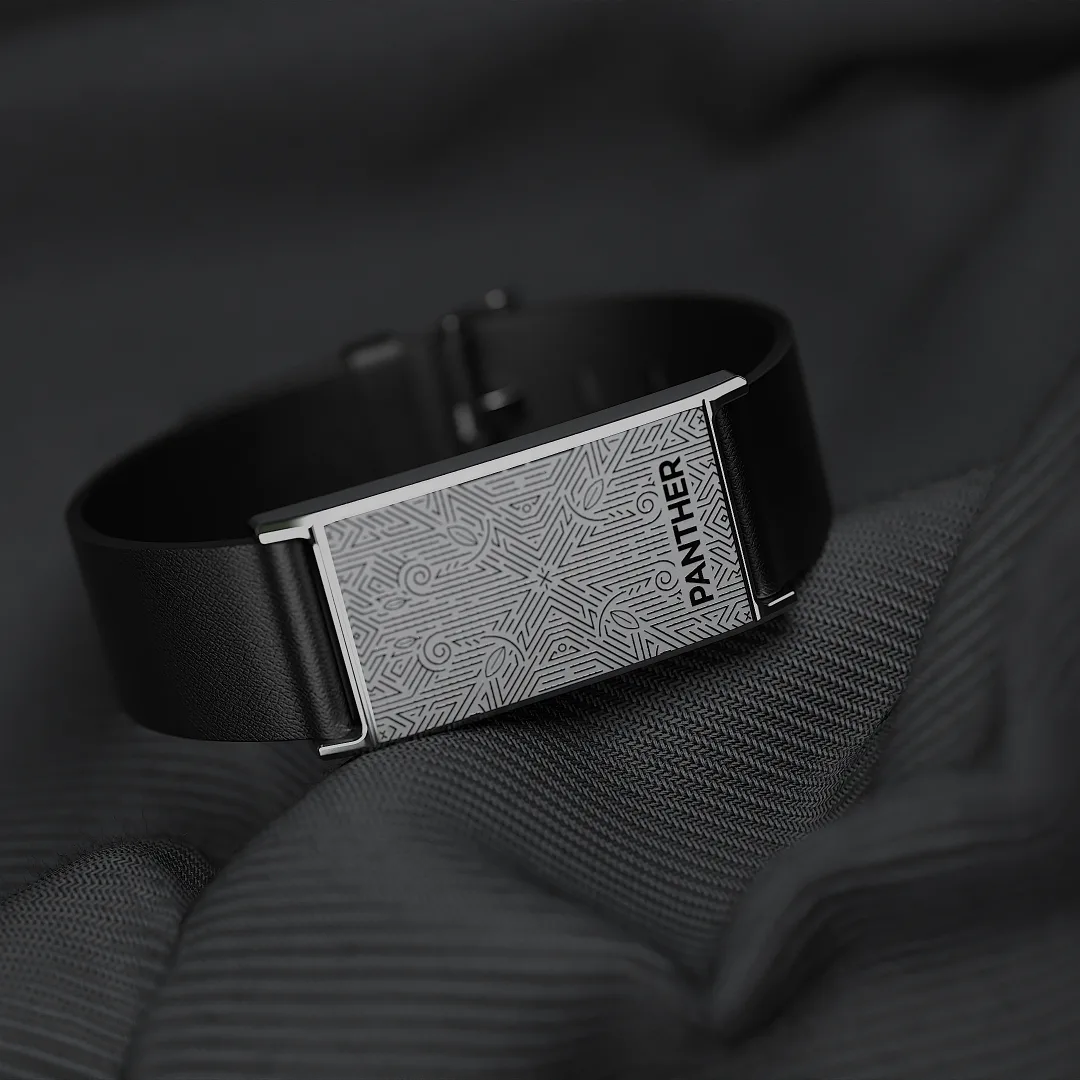
Most wearables are plastic wrapped in marketing. The Eclipse is different at the material level.
The case is machined from 304L stainless steel, the same alloy used in Swiss watchmaking. Naturally corrosion-resistant. Hypoallergenic. Purposefully weighty in the way only real metal is. Three face designs and twelve strap configurations make it more customizable than most fashion watches at this price point.
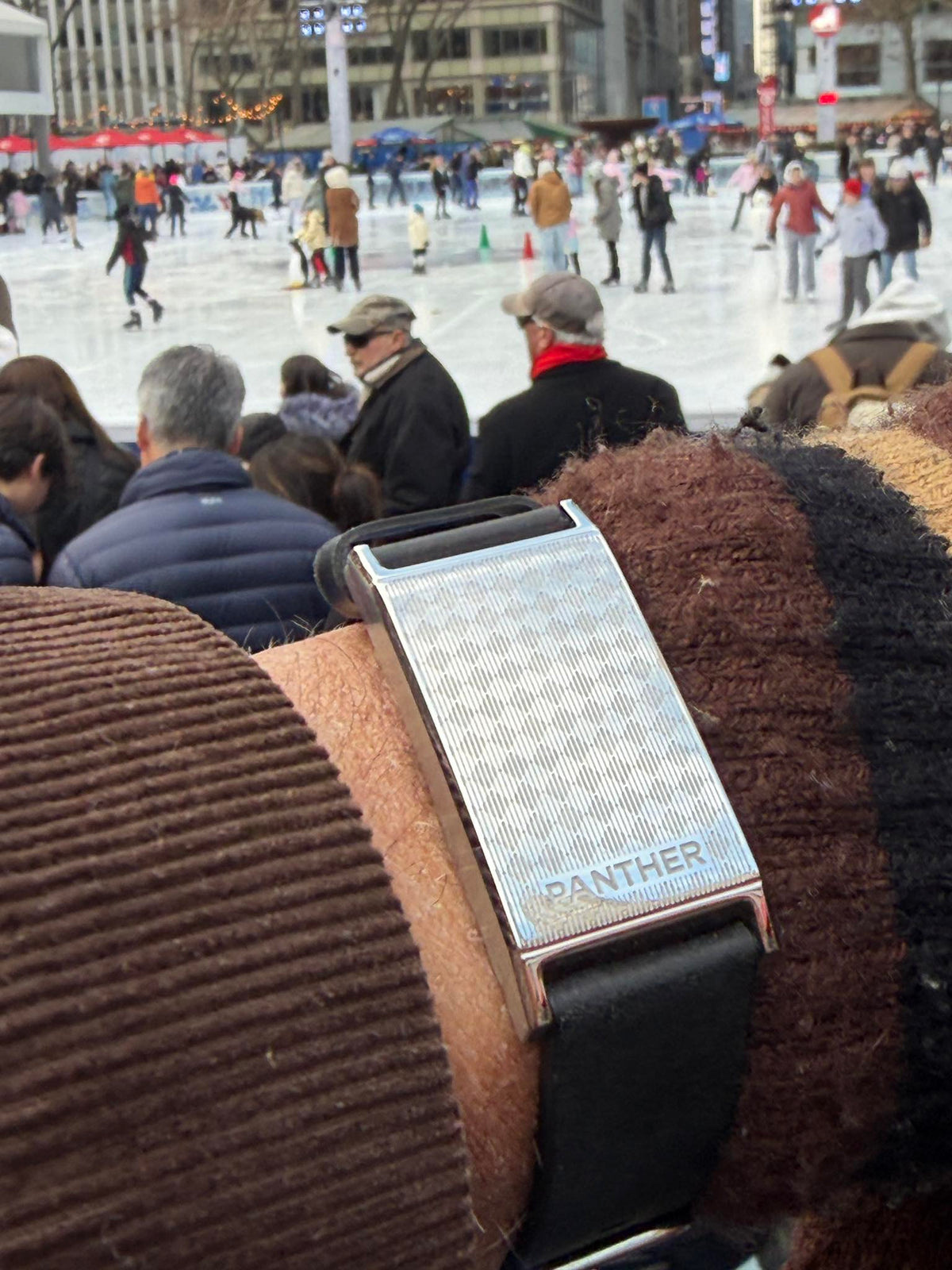
Panther calls this Neo-Deco: a modern nod to Art Deco's bold geometry. Angular. Sculptural. The base design got three unsolicited compliments in three weeks, none of them suspecting they were looking at a health tracker. Which is the whole point.
A Health Tracker People Are Proud To Show Off
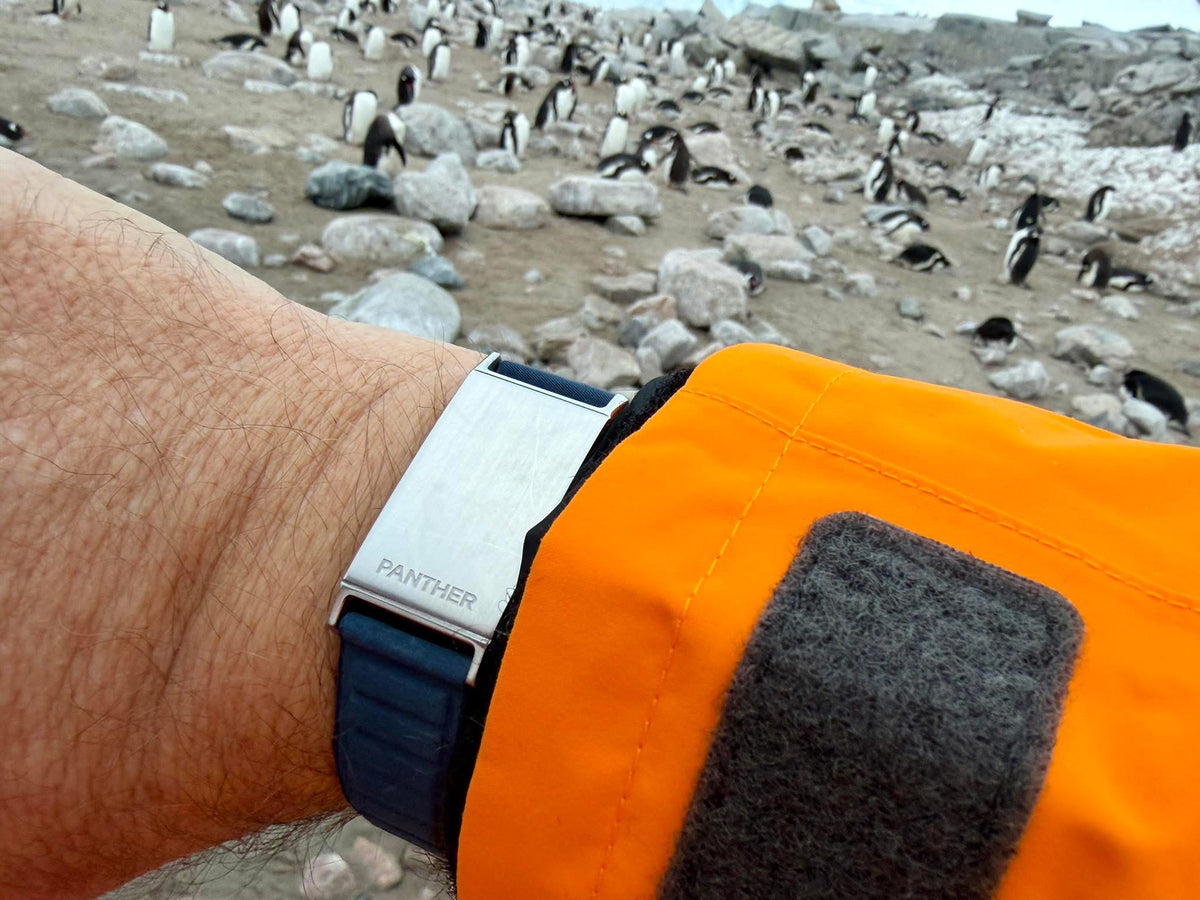
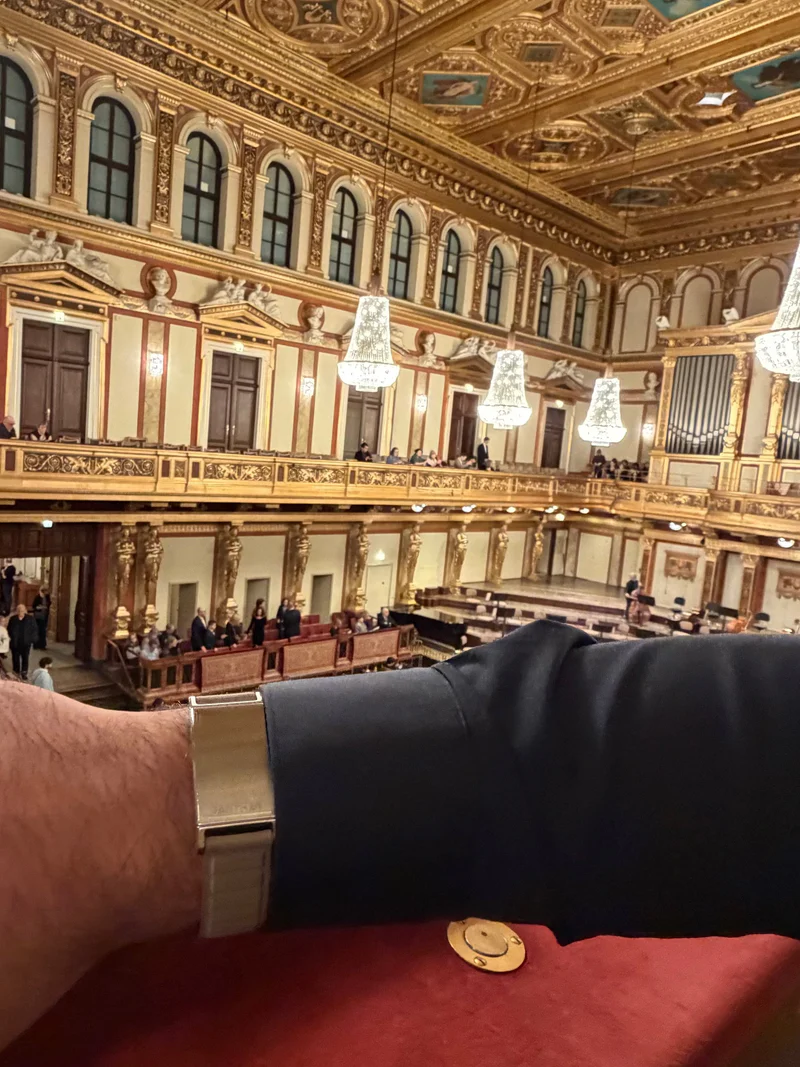
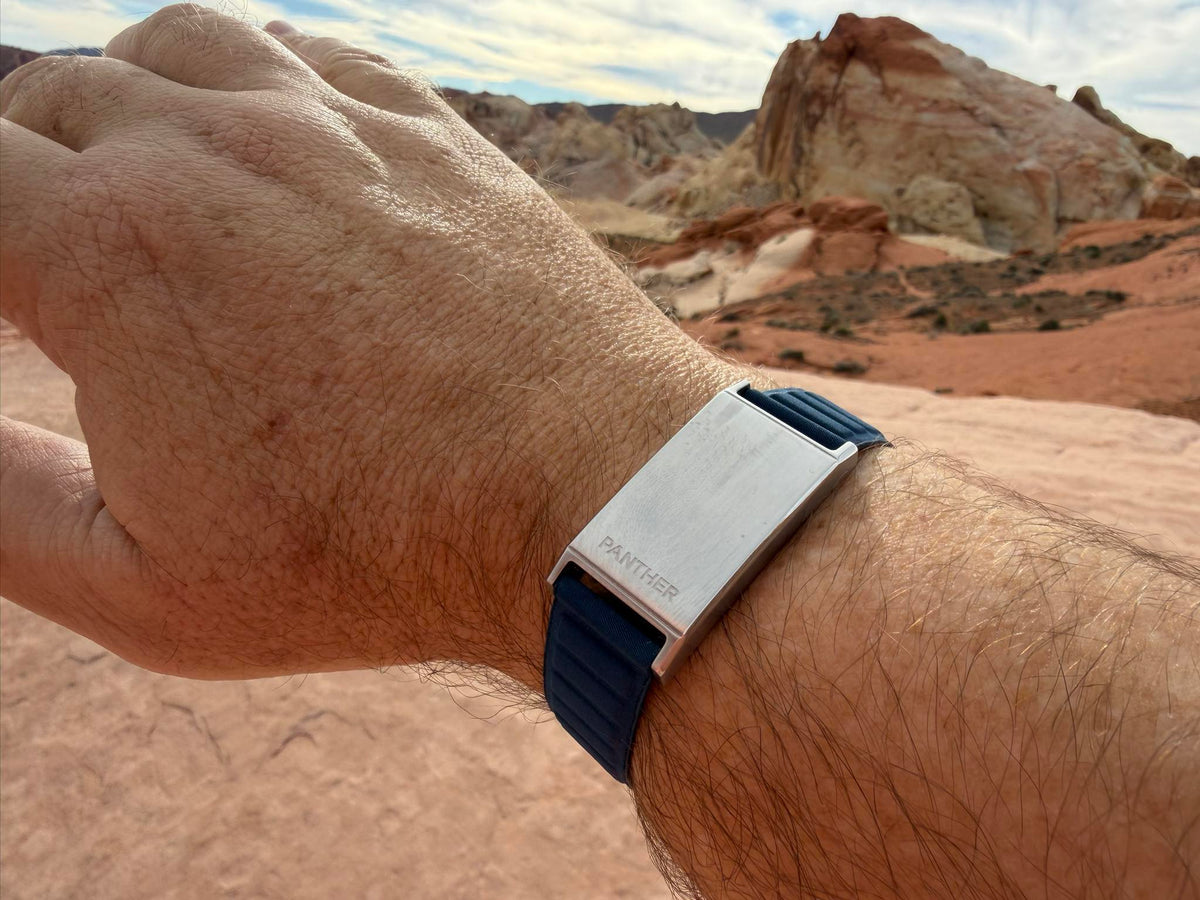
From concert halls to canyons, owners are wearing the Eclipse everywhere and sending Panther the photos.
Free shipping · 30-day returns · No subscription